David Burnette on the Watson Family
Slavery in Pennsylvania did not vanish with the passage of the Gradual Abolition Act of 1780; rather, it adapted, persisted, and shaped the lives of Black families for generations. The Watson family of Franklin County stands as a powerful testament to this reality. Their story reveals how they became active agents in shaping their own destinies.
The legal structure of gradual abolition ensured that freedom would come in fragments. Those already enslaved often remained so for life, while children born after 1780 were bound into long terms of servitude—what Cory James Young calls “term slavery.” Phoebe Chambers lived this tension. Although born just four years before the gradual abolition act, she was nevertheless registered as a slave for life. While Pennsylvania is remembered as a place moving toward freedom, Phoebe was only liberated because her enslaver voluntarily manumitted her in 1794. Her experience reminds us that abolition, as it functioned on the ground, was not a clean break—it was a slow unraveling that left many still tied to bondage.
![A copy of an official-looking, hand-written government document. The paper is bright white and the cursive script dark and spindly. In it, Ruhamah Colhoon vows to manumit a woman she identifies as “Mulatto Phebe” when she turned twenty-eight. Ruhamah declares that she does this because of Phebe’s “good behaviour and fidelity,” to “encourage her to do well in future,” and because Ruhamah “abhor[s] slavery.”](/images/Watson1.jpg)
It was within this uncertain world that Cesar Watson came of age. Born enslaved in 1775, he nevertheless obtained his freedom during the age of gradual abolition. But “freedom” did not mean security. His marriage to Phoebe Chambers reflects how fragile Black family life could be under these conditions. Even after both were technically free, the reach of slavery had not let go. In 1822, Cesar and Phoebe Watson appeared in a runaway slave notice tied to their daughter, Hannah, who had fled enslavement in Peters Township, Franklin County. That single record speaks volumes. It shows that in Pennsylvania, slavery did not simply disappear—it followed families into the next generation, threatening to pull them back at any moment.
The next generation of Watsons carried both that burden and a determination to rise beyond it. Alexander Watson, born in 1813 in Franklin County, likely entered life under the shadow of servitude. Like many Black Pennsylvanians of his time, his early life is thinly documented, with his first clear appearance in the 1840 federal census. But what the records lack in detail, his life makes up for in impact. In Mercersburg, he became a butcher, a preacher, and a respected figure in the community. His presence alone challenges the idea that Black life in early Pennsylvania was marginal or invisible.
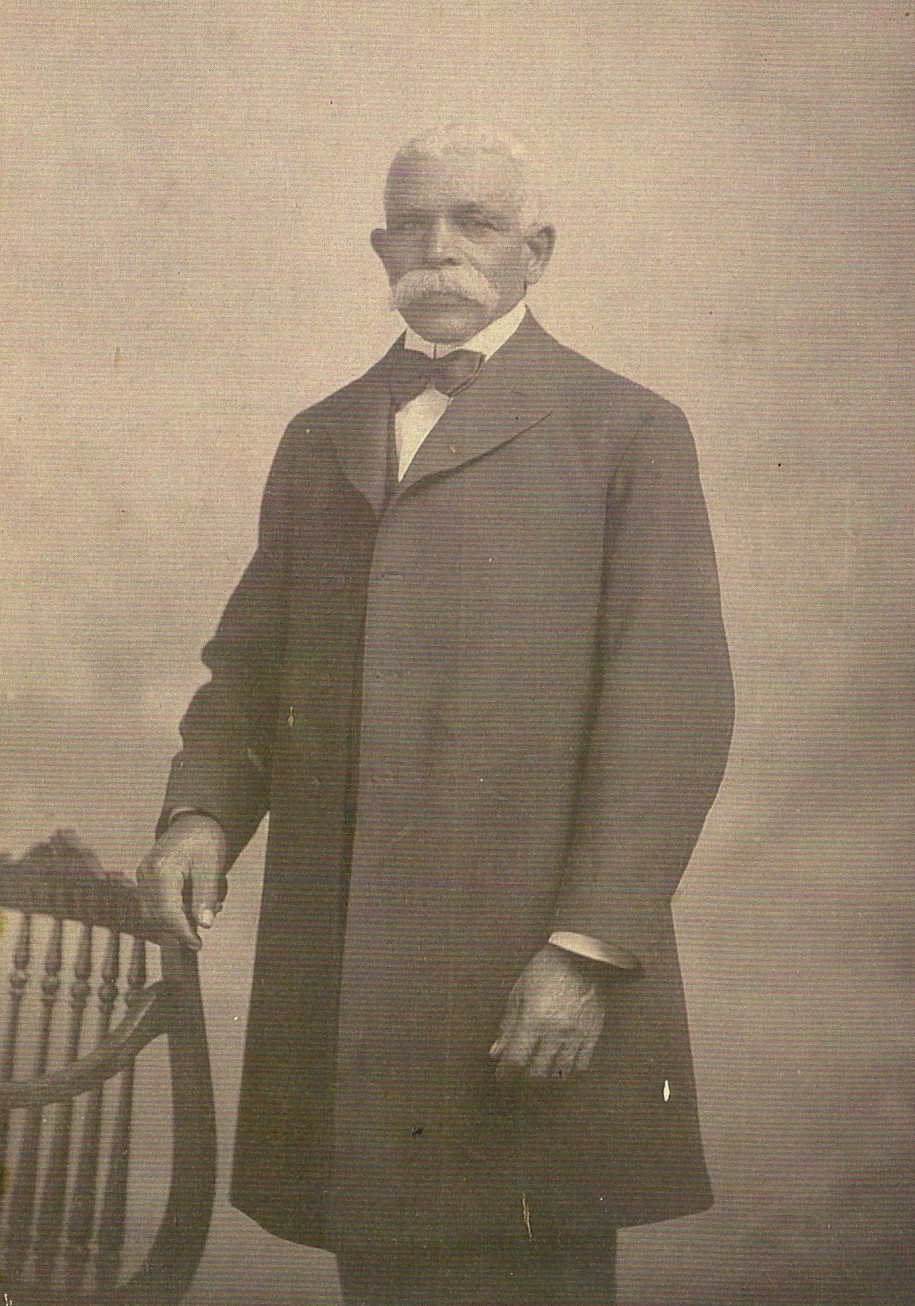
That presence became unmistakable during the Civil War. On July 29, 1864, Confederate cavalry under General John “Tiger” McCausland moved through Mercersburg in a campaign that culminated the next day in the burning of Chambersburg. As panic spread, Alexander Watson stepped into the moment. When a local officer returned, exhausted, from the front lines, Watson asked to borrow his horse. With his young son mounted behind him, Watson spurred the animal directly into danger—at one point caught between opposing lines of fire—before managing to escape into safer ground. This was not simply a story of survival. It was a demonstration of courage, quick judgment, and a willingness to act when it mattered most to protect his family.
But Alexander Watson’s importance was not limited to a single moment of bravery. He was also part of a wider current of Black political and abolitionist activity that shaped the region. Later accounts report that his home served as a stopping place for John Brown in the years leading up to the Harpers Ferry raid. Watson kept that secret through the war, a decision that speaks to both the risks involved and the seriousness of his commitment. In 1874, he stood publicly in that same tradition when he spoke at a Colored Republicans meeting at Repository Hall in Chambersburg. By then, he was not just a participant in history—he was helping to define its direction.

The Watson family's legacy did not end with Alexander. At least five of his sons served in the Civil War, tying the family directly to the United States' fight to end slavery nationwide. Their service reflects something larger than military participation. It shows a generational commitment to freedom—one built not on abstract ideals, but on lived experience. That commitment carried forward in later generations, including Robert "Cornie" Watson, whose work as a community historian preserved and honored that legacy. His honorary degree from the local preparatory school, Mercersburg Academy, is more than symbolic; it is evidence that the Watson family's story remained rooted in the community they helped shape.
What the Watson family reveals is simple but important: slavery in Pennsylvania was real, it lasted longer than many are willing to admit, and it left its mark on families across generations. At the same time, their story pushes us to see more than suffering. It shows determination, strategy, courage, and growth. The Watsons were not just people who endured slavery—they were people who navigated it, resisted it, and ultimately reshaped the world around them.
If we are serious about understanding Pennsylvania's past, we must move beyond the idea that it was an early place of refuge. Stories like that of the Watson family force us to look closer. They remind us that freedom here was contested, incomplete, and hard-won—and that those who lived through it were not passive figures, but active participants in the long fight to make it real.
David Burnette is a family historian and genealogical researcher whose work focuses on the early Cuff, Himes, Stoner, and Frisby families of Pennsylvania. A direct descendant of the Cuff family through his maternal line, Burnette traces his lineage to George Cuff, his fourth great-grandfather. Already drawn to history, he became increasingly fascinated as he realized how his own family’s experiences intersected with larger historical events. His research seeks to preserve the stories, records, and material culture of these families while placing their lives within the broader context of early American and Pennsylvania history.