David Burnette on the Cuff Family
My name is David Burnette and I am a direct descendant of one of the earliest documented enslaved families in Colonial Pennsylvania. The history I present is not only from oral folklore; it is drawn from tax records, court proceedings, church registries, land grants, marriage records and newspaper accounts that record the lives of my ancestors in Franklin County and beyond. The Cuff family’s story challenges a deeply rooted myth—that Pennsylvania stood apart from slavery in its earliest years.
Pennsylvania is often remembered as a colony of conscience—William Penn’s “holy experiment,” shaped by Quaker ideals of equality and religious tolerance. In this view, it stands apart from the plantation South. However, that reputation obscures a complex truth. From its earliest history, Pennsylvania sanctioned and sustained slavery. Enslaved labor underwrote its frontier westward expansion, supported its political leadership, and existed within households that professed moral reform.
My family, the Cuffs, were among the earliest enslaved people in the province. Their lives span the founding of Pennsylvania, the Revolutionary era, the formation of the federal judiciary, and the slow, uneven dismantling of slavery in the North known as gradual abolition. Their story is not peripheral to Pennsylvania’s history, but rather embedded in its foundations. As a direct descendant of the Cuff family, I write not only as a researcher, but as an inheritor of this history.
One of the earliest documented ancestors in my lineage is Peter Cuff, born in 1703 in Chester County, Pennsylvania. He lived during a period when the colony was still defining its economic and legal systems. Though Pennsylvania is frequently described as moderate in its slaveholding practices, Peter’s life reflects a simple fact: slavery was normalized there early. In 1776, a Quaker family, the Malins, manumitted him. That year marked both American independence and a growing conscience among many Pennsylvania Quakers. Yet Peter’s enslavement prior to that act underscores a contradiction at the heart of the colony’s founding ideals.
Family oral history maintains that the Cuff surname originated with Absalom Cuff, a Quaker who arrived in the English colonies in 1683 and became one of the earliest landowners in Delaware, later receiving land grants in Philadelphia from William Penn. Whether the name was imposed, adopted, or inherited through proximity, the association is telling. My family’s name is tied to the earliest generation of settlers in Pennsylvania, Delaware, and New Jersey— a reminder that enslaved people were present at the creation of colonial society, not merely appended to it later.
By the late eighteenth century, my fourth great-grandfather, George Cuff, witnessed the intersection of enslavement and state power. Born in 1770 in Mercersburg in what is now Franklin County, he was enslaved by Philip Davis, an early settler in the Cumberland Valley. Davis later testified that he had known George since infancy and that he had been raised by Catherine Davis (likely registered by one David Davis). George appears in tax records as property—recorded, valued, and accounted for.
In 1799, George was living on High Street in Philadelphia with Richard Peters—a prominent Pennsylvania lawyer, Continental Army officer, Speaker of the Pennsylvania House, and later United States District Judge. At that time, Philadelphia served as the nation’s capital. That George lived and labored within that environment places the Cuff family within the physical and political center of the early republic.
George later became enslaved by William Findlay, another Mercersburg native who would rise to serve as Pennsylvania’s fourth governor and later as a United States senator. In 1807, while serving in the Pennsylvania House of Representatives, Findlay manumitted George. Yet even this act became entangled in politics. During the 1820 gubernatorial election, Findlay’s opponent, Joseph Heister, accused him of freeing George for political gain. George was called to testify in court, publicly refuting the charge. The Gettysburg Gazette published several testimonies regarding his character, including one from his former enslaver, Philip Davis.
This moment is striking. A man born into slavery in colonial Pennsylvania became the subject of statewide political controversy. His life was invoked in partisan debate. His testimony was recorded in print. The Cuff history is not hidden in the margins of plantation ledgers; it is embedded in the political record of the Commonwealth.
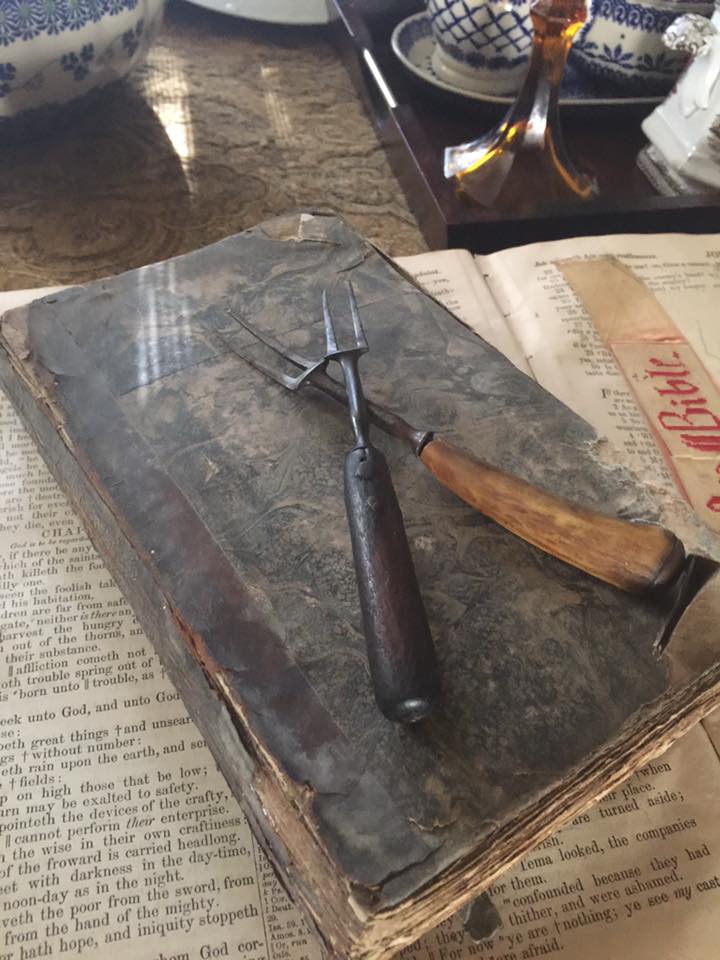
George’s wife, my ancestor Sarah “Sally” Cuff, further complicates the narrative of Northern slavery. Born around 1783 in Mercersburg, she appears in an 1814 state census listed under the category “slave,” identified as a kitchen maid. Notably, she was recorded as literate. In her possession was a copy of English Housewifry Exemplified, originally published in 1741 by Elizabeth Moxon. The family maintains this book today. The presence of that book within her household suggests intellectual engagement and domestic authority rarely acknowledged in discussions of enslaved women in Pennsylvania.
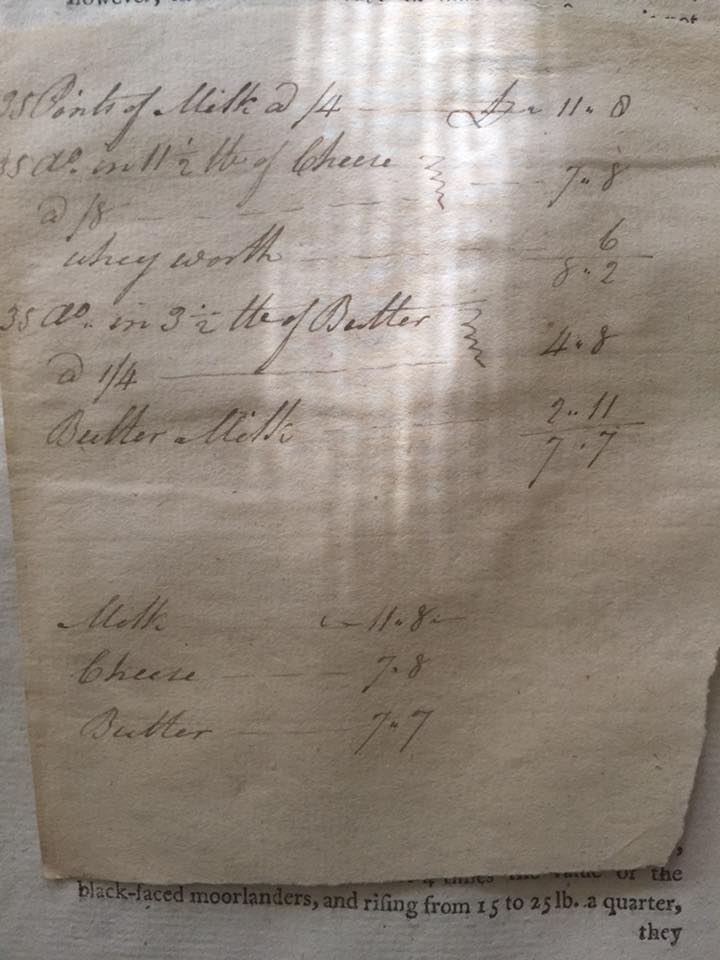
Sarah’s life spanned the implementation of Pennsylvania’s 1780 Gradual Abolition Act. This law declared that children born to enslaved women after its passage would serve as indentured servants until age twenty-eight—what Cory James Young describes as “term slaves”—rather than remain enslaved for life. Those born before the act, however, could remain enslaved indefinitely. Sarah lived long enough to witness the approach of the Civil War. In 1859, records from Falling Spring Presbyterian Church in Chambersburg note that she was “dismissed to the colored church,” reflecting the hardening racial segregation of American religious life. The Upper West Conococheague Presbyterian Church records her death in 1867 at the age of eighty-four as a free woman. Her lifespan stretched from the early republic to Reconstruction.
Another ancestor, Killbuck Cuff, born around 1755, reflects the complex racial and frontier entanglements of early Pennsylvania. Family tradition holds that he was the son of an enslaved woman and Gelelemend Killbuck, a Lenape chief active during the Revolutionary era. He was enslaved by William Chambers, son of Benjamin Chambers, founder of Chambersburg. The region around the Tuscarora Mountains and the Conococheague watershed was not merely a colonial settlement zone but a contested Indigenous homeland. Burnt Cabins, named for the burning of settler homes in an effort to maintain peace with the Lenape, marks a landscape shaped by negotiation and violence.
If Killbuck Cuff indeed disappeared westward into the Ohio Valley, as family history suggests, his life represents the shared displacement experienced by both African and Indigenous peoples in early America. My ancestry reflects not a single narrative but an interwoven one—African, English, and Lenape, mixed-blood people—shaped by enslavement, alliance, and survival.
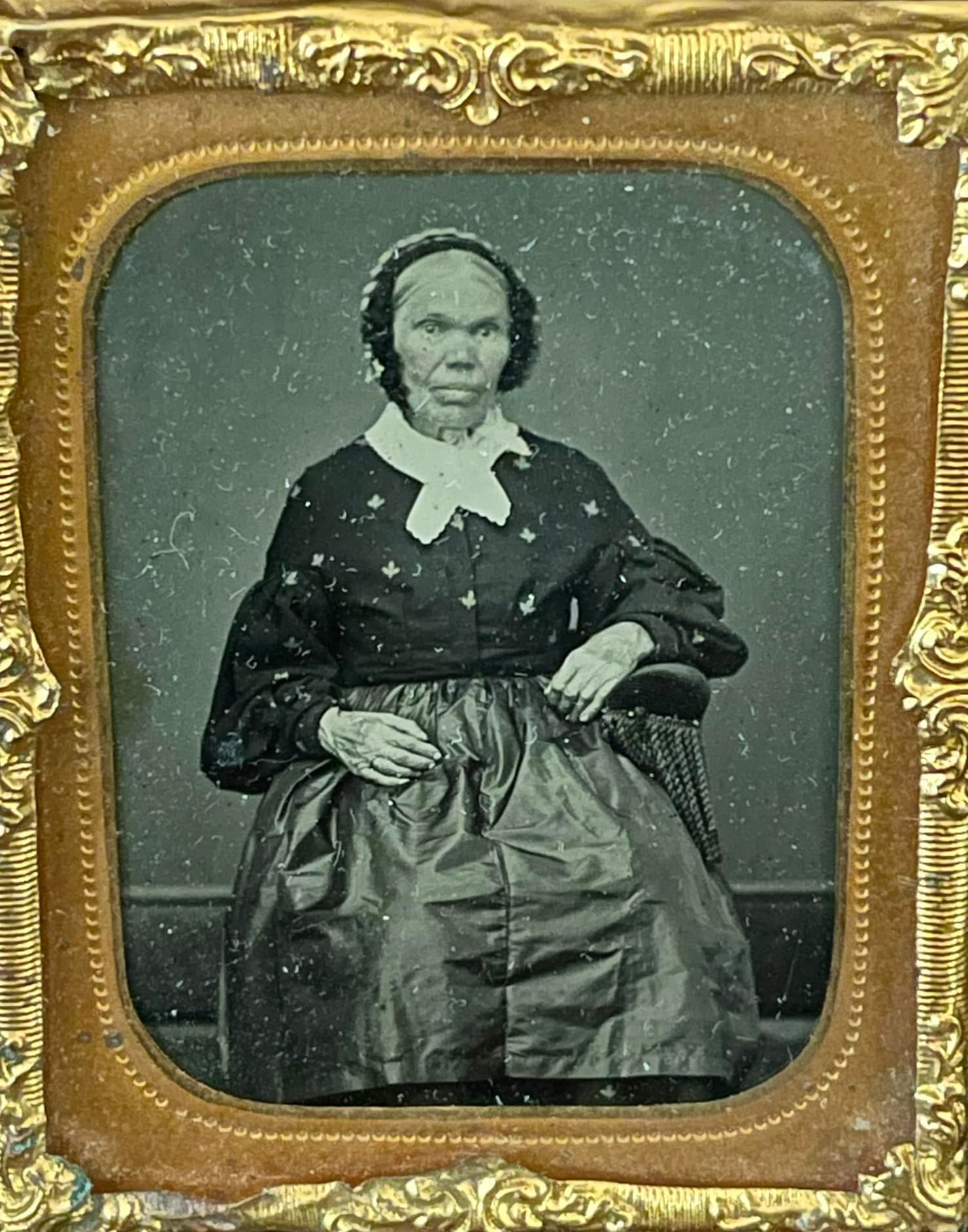
The Cuff family’s documented presence from the early 1700s onward places them among the earliest enslaved families in Pennsylvania. Their lives intersected with land grants issued by William Penn, with Quaker manumission practices, with Revolutionary-era frontier warfare, with federal judges, governors, and senators. Slavery in Pennsylvania was not an aberration. It was integrated into the colony’s landholding systems, political leadership, and domestic economy.
As a descendant, I do not view this history as distant. The names in tax ledgers are my ancestors. The courtroom testimony was given by my fourth great-grandfather. The church dismissal entry records the life of my foremother. The political controversies were not abstractions; they shaped the trajectory of my family.
Recognizing the Cuffs as one of the earliest enslaved families in Pennsylvania compels a reassessment of the Commonwealth’s historical identity. Pennsylvania was not simply a haven of liberty. It was a society that proclaimed equality while sustaining bondage. My family’s history illustrates that contradiction with clarity.
The story of the Cuffs is not a footnote to Pennsylvania history. It is part of its foundation. And through descendant scholarship, that foundation can finally be examined with the depth and honesty it requires.
David Burnette is a family historian and genealogical researcher whose work focuses on the early Cuff, Himes, Stoner, and Frisby families of Pennsylvania. A direct descendant of the Cuff family through his maternal line, Burnette traces his lineage to George Cuff, his fourth great-grandfather. Already drawn to history, he became increasingly fascinated as he realized how his own family’s experiences intersected with larger historical events. His research seeks to preserve the stories, records, and material culture of these families while placing their lives within the broader context of early American and Pennsylvania history.